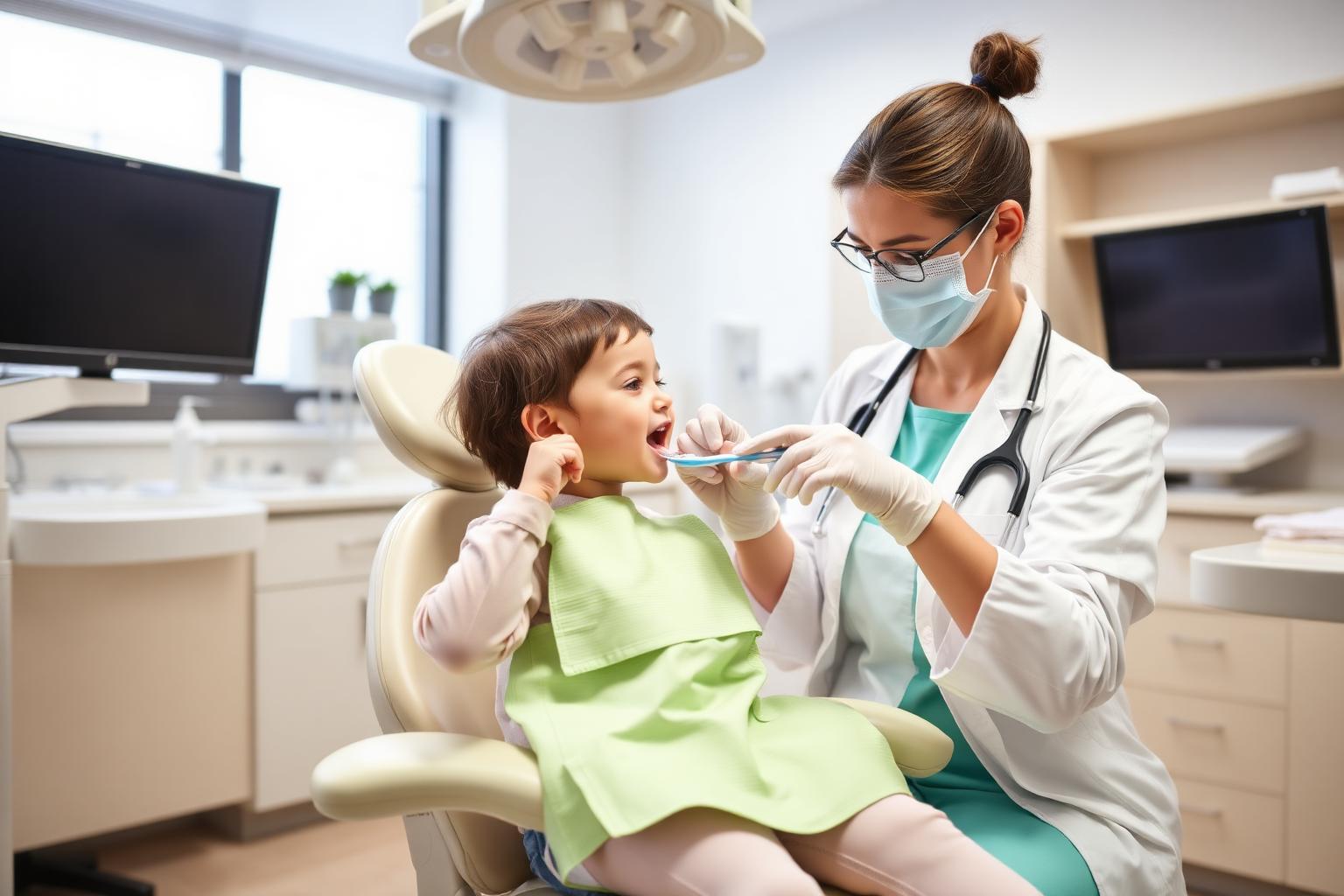
Treating Dental Trauma in Children's Teeth in Canton, Ohio
Canton Pediatric Dentist provides trauma treatment for infants, children, and teens in Canton, Ohio, as a pediatric dental practice following American Academy of Pediatric Dentistry (AAPD) and American Dental Association (ADA) clinical guidance.
Beyond first aid, dental trauma often requires careful classification and months of follow-up. Here's how we treat avulsed, displaced, and fractured teeth in growing mouths.
Clinical Care for Dental Trauma in Children
While our emergency care page covers what to do in the first moments after an injury, this page focuses on the clinical side: how we classify different types of trauma and what treatment and monitoring look like over the weeks and months that follow. Dental injuries range from a minor chip to a fully avulsed tooth, and each category has its own treatment path and follow-up timeline.
Avulsed Permanent Teeth
An avulsed tooth is one that has been completely knocked out of its socket. For a permanent tooth, transport and timing matter enormously — a tooth stored properly in milk, saline, or a tooth-preservation product and reimplanted quickly has a meaningfully better chance of long-term survival than one left dry or handled by the root. Once the tooth is back in place, we typically splint it to neighboring teeth to hold it stable while the ligament reattaches, then schedule follow-up visits over several months to watch for signs of nerve failure.
When Root Canal Treatment Becomes Necessary
Many avulsed and severely displaced teeth eventually need pulp therapy because the nerve doesn't reliably survive the injury, even when the tooth itself is saved. We monitor tooth color, sensitivity, and X-ray appearance at scheduled intervals to catch this early, since a tooth can look stable initially and then develop problems weeks later.
Luxation and Displaced Teeth
Luxation injuries happen when a tooth is pushed sideways, driven deeper into the socket (intrusion), or partially pulled out (extrusion) without fully leaving the mouth. Treatment depends on the direction and severity of displacement: some teeth are gently repositioned and splinted, while intruded teeth are sometimes left to re-erupt on their own under close observation, since forcing them back into place can cause further damage. Baby teeth are handled more conservatively than permanent teeth, since aggressive repositioning risks the developing permanent tooth underneath.
Fractured Crowns and Root Fractures
A fractured crown can range from a small enamel chip to a break that exposes the nerve. Minor chips are typically smoothed or restored with bonding, moderate fractures often need a composite restoration, and fractures that expose the pulp usually require pulp treatment before a final restoration like a crown is placed. Root fractures below the gumline are harder to detect visually and are usually confirmed with X-rays; depending on where the fracture sits, the tooth may be stabilized and monitored or, in more severe cases, may eventually need extraction.
Soft-Tissue Injuries
Lips, gums, and tongues are frequently injured alongside teeth in a fall or collision. Small cuts and bruises usually heal well on their own with gentle cleaning, but deeper lacerations, especially those that gape open or involve the lip border, may need sutures. We examine soft tissue carefully during any trauma visit because embedded debris or gravel from a fall can lead to infection if missed.
Long-Term Monitoring After Injury
Trauma follow-up isn't a single visit — it's a schedule of checks, often at one week, one month, three months, six months, and sometimes a year after the injury. We're watching for gray or yellow discoloration that can signal nerve death, root resorption that weakens the tooth from the inside, and, for baby-tooth injuries, any disruption to the permanent tooth developing below the gumline. The American Academy of Pediatric Dentistry recommends this kind of structured monitoring precisely because complications from trauma can surface well after the initial injury seems to have healed.
Preventing Sports and Playground Injuries
Many of the injuries we treat happen during contact sports, biking, or active outdoor play. A properly fitted custom sports mouthguard absorbs impact that would otherwise land directly on the front teeth, and it's one of the simplest changes a family can make to reduce the odds of a repeat visit here. For younger kids, supervision on playground equipment and age-appropriate gear on bikes and scooters go a long way toward reducing fall-related trauma as well.

Keep a Trauma Timeline
Jot down the date of the injury and any changes you notice in tooth color or sensitivity — this history helps us track healing at follow-up visits.
Ask About Splint Care
If a tooth is splinted after an injury, we'll show you how to keep the area clean without disturbing it while it stabilizes.
What Sets Our Trauma Care Apart
- Detailed classification of injury type before treatment begins
- Splinting and stabilization protocols for displaced teeth
- Careful, conservative handling of injured baby teeth
- Root canal referral pathways when nerve damage is likely
- Soft-tissue evaluation alongside every tooth injury
- Structured long-term monitoring schedule after trauma
- Restoration options ranging from bonding to full crowns
- Injury-prevention guidance tailored to your child's activities
About Canton Pediatric Dentist
These services frequently come into play during trauma treatment and recovery. Canton Pediatric Dentist treats children across Canton, Ohio and neighboring areas — from first-tooth checkups and preventive fluoride and sealants through restorative, orthodontic, and urgent care. Full details of every service, our approach to child comfort, and how to book are on the main Canton Pediatric Dentist page.
Frequently Asked Questions
Worried About a Recent Dental Injury?
Bring your child in so we can evaluate the injury properly and set up the right follow-up plan from the start.