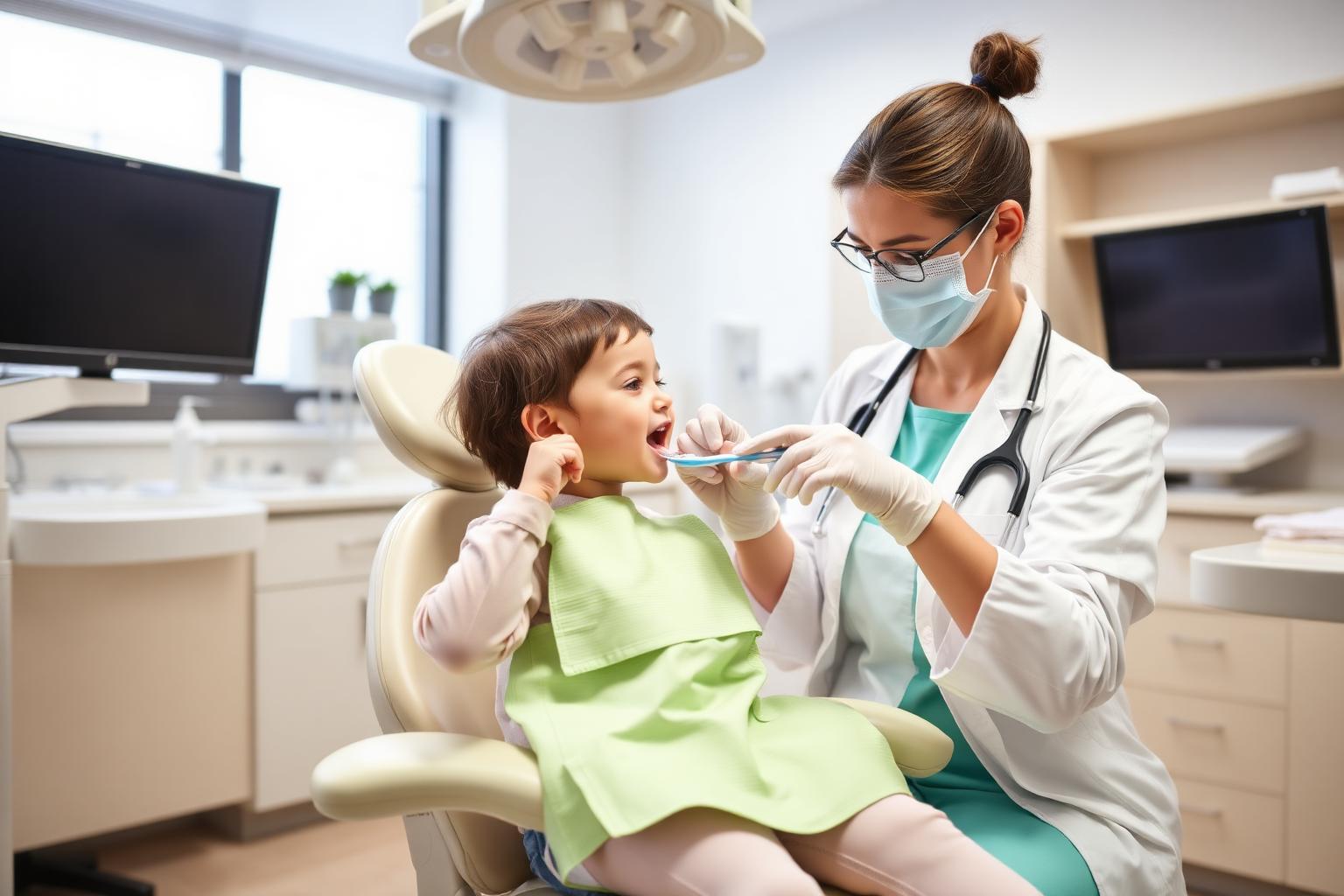
Seeing Beyond the Surface With Digital X-Rays in Canton, Ohio
Canton Pediatric Dentist provides digital dental x-rays for kids for infants, children, and teens in Canton, Ohio, as a pediatric dental practice following American Academy of Pediatric Dentistry (AAPD) and American Dental Association (ADA) clinical guidance.
Digital X-rays let us see the parts of a tooth and jaw that a visual exam simply can't reach. Here's what they show, how safe they are, and how often your child actually needs them.
What X-rays Reveal That an Exam Alone Cannot
A visual exam only shows what's on the surface of a tooth. Digital dental X-rays for kids in Canton, OH let us look between teeth, below the gumline, and inside the jaw to catch problems that would otherwise go unnoticed until they hurt. That includes cavities forming between tightly spaced teeth, infections at a tooth's root, and unerupted teeth that are coming in at an angle.
Radiation Dose and Shielding, Explained Simply
Digital sensors require far less exposure than older film X-rays — often 80–90% less — because they're more sensitive to radiation and don't need multiple attempts to get a usable image. We also use a lead apron and thyroid collar as standard practice for every child, every time. The American Academy of Pediatric Dentistry considers this level of exposure safe when X-rays are used appropriately and only as often as clinically justified.
The Two Main Types We Use
Bitewing X-rays
These small images capture the upper and lower back teeth biting together, and they're the go-to view for spotting cavities forming between teeth that a mirror simply can't see.
Panoramic X-rays
A single wide image shows the entire mouth, including unerupted teeth, jaw structure, and developing roots — useful for tracking growth patterns or planning ahead for orthodontic evaluation.
How Often Kids Actually Need Them
Frequency isn't one-size-fits-all. A child with a low cavity history and well-spaced teeth may only need bitewings every 12–24 months, while a child with tight contacts, past cavities, or ongoing treatment might need them more often. We base the interval on individual risk rather than defaulting to X-rays at every single visit.
When a Child Won't Hold Still
Younger kids and anxious patients sometimes struggle to stay still long enough for a clear image. Our team uses child-sized sensors, brief exposure times, and a calm, step-by-step explanation before starting. For children who need extra support, we can also talk through options like anxiety-reduction techniques or, in select cases, mild sedation to get a usable, diagnostic image without repeated attempts.
What to Ask to See on the Screen
Because images appear instantly on a monitor, parents don't have to take findings on faith. It's reasonable to ask the team to point out exactly where a shadow on a bitewing looks different from a healthy tooth, or to zoom in on an unerupted tooth on a panoramic view so you can see its angle for yourself. Asking "can you show me what a normal tooth looks like next to this one" often clarifies more than a verbal description ever could, and most families leave with a much clearer sense of why a particular treatment was recommended.
We also encourage parents to ask how a current image compares with one from a prior visit, since side-by-side comparison can reveal whether a small area of concern has stayed stable or grown since it was last tracked. This kind of before-and-after view is especially useful for monitoring a spot that isn't yet a cavity but is being watched closely.
How Findings Shape the Treatment Plan
Once we have the images, we review them with you directly, pointing out anything relevant on-screen rather than describing it in the abstract. A cavity spotted early on a bitewing might mean a simple filling now instead of a larger repair later, while a panoramic image showing crowding early can prompt a conversation about space maintainers or future orthodontic planning. X-rays don't replace the exam — they fill in the parts of the picture the exam alone can't reach, letting us catch small issues while they're still small.
Why we don't X-ray at every single visit
Overusing X-rays doesn't add diagnostic value once a child's risk is low and spacing is good — we base the schedule on actual need, not habit.
What a panoramic image adds for growing kids
One wide image can show unerupted teeth, jaw alignment, and root development years before those issues would be visible in the mouth.
What digital imaging adds to every checkup
- Detects cavities between teeth invisible to a visual exam
- Uses up to 90% less radiation than older film-based systems
- Standard lead apron and thyroid shielding for every child
- Bitewing and panoramic views chosen based on what's needed
- Intervals set by individual cavity and growth risk, not routine habit
- Child-sized sensors and shorter exposure for younger patients
- Options for anxious kids who struggle to hold still
- Images reviewed with parents to explain the treatment plan clearly
About Canton Pediatric Dentist
X-ray findings often connect directly to these next steps. Canton Pediatric Dentist treats children across Canton, Ohio and neighboring areas — from first-tooth checkups and preventive fluoride and sealants through restorative, orthodontic, and urgent care. Full details of every service, our approach to child comfort, and how to book are on the main Canton Pediatric Dentist page.
Frequently Asked Questions
Wondering If Your Child Is Due for X-Rays?
We'll check your child's history and only recommend imaging when it genuinely adds value to the exam.